
Turning the pages…
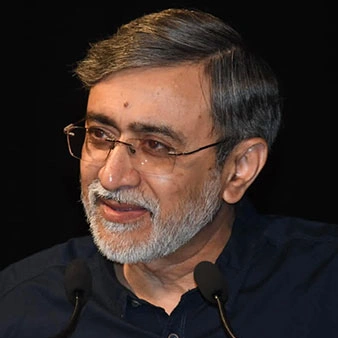
Prafull Shiledar is a noted Indian poet writing in Marathi. He has four Poetry volumes in Marathi, two in Hindi, one in Kannada translations, one in Odia translations, one in Punjabi translation. Recently ‘Scratching the Silence’, a book of his poems in English translation is published by Red River Press, Delhi. His poetry is published in many national and international literary journals and included in poetry anthologies and in many universities as a part of academic studies. His literary essays are collected in a volume called ‘Yerzara’. His poems are translated into many Indian and foreign languages including Hindi, English, Malayalam, Kannada, Telugu, Manipuri, Gujarati, Nepali, Odia, Punjabi, Dakhani, Slovak, Turkish & German.
As a literary translator, he was honored by prestigious Sahitya Akademi translation award in 2018 and Balshastri Jambhekar award in 2014. He has translated Indian, European, American, Latin American poetry into Marathi and Hindi. He has published six translated books. He has six edited books. Since 2018 he is the editor of renowned Marathi literary quarterly ‘Ýugvani’.
He has read poetry in many literary festivals and events across India, Europe, USA and Middle East. He was invited for poetry reading in 11th Ars Poetica International poetry Festival, Bratislava, Slovakia in Europe. He was a fellow writer in the International Writer’s Residency Program by Art Omi, New York during Spring 2025.
Topic
Poetry Without Borders | Prafull Shiledar in Conversation with Dr Supantha Bhattacharya | OCLF
On 22nd Nov 2025 01.00 PM TO 01:40 PM
This reflective session with poet, translator, and editor Prafull Shiledar explored how poetry travels beyond language, geography, and cultural identity to reach the core of human experience. In conversation with Dr Supantha Bhattacharya, the discussion highlighted how poems carry emotions across borders and create shared meaning even among diverse audiences.
The session touched upon the universality of feeling, the beauty of linguistic diversity, and the ability of poetry to act as a bridge between communities. Through examples and insights, the speakers showed how poetry becomes a common ground where emotion, memory, and culture meet.
The conversation encouraged listeners to see poetry not only as a literary form but as a way of understanding one another with compassion and openness.