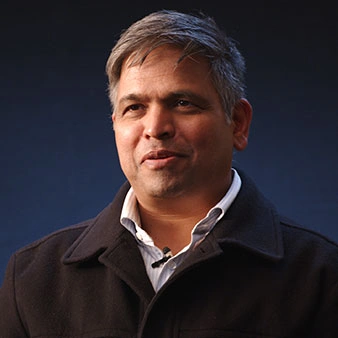
Nilesh Nilkanth Oak is an author, original researcher, GAIA and TEDx speaker, UAA-ICT Distinguished Alumnus, and sought-after keynote speaker. He holds BS and MS in Chemical Engineering and Executive MBA. He has published 3 revolutionary books: 1. When did the Mahabharata War Happen, 2. The Historic Rama, 3. Bhishma Nirvana. His books have been and are being translated into various other languages. He travels extensively around the world speaking to university and college students and to mainstream audiences. His work has inspired novels, novelettes, documentaries, and movies.
Nilesh helps individuals become aware of the deep wisdom and antiquity of Indian civilization so that they truly comprehend, present, or defend the grand narrative of this civilization unlike most other Indic researchers because he builds it through scientific acumen and logical reasoning.
He is a researcher and adjunct faculty at the Institute of Advanced Sciences, Dartmouth, Massachusetts, USA.
Topic
Why Only India Has Itihasa | Dr Nilesh Oak on Ancient Indian Astronomy and Civilizational Knowledge | OCLF
On 22nd Nov 2025 02.00 PM TO 02:40 PM
The session "Why Only India Has Itihasa? A Scientific Study of Ancient Indian Astronomy" featured author and researcher Dr Nilesh Oak in conversation with Khushboo Shah. The discussion explored India’s civilizational depth, its sophisticated astronomical knowledge and the unique character of Itihasa as understood through indigenous traditions.
Dr Oak examined how Western narratives have often overlooked or misrepresented India’s intellectual evolution. He highlighted the scientific and philosophical advancements found in ancient Indian texts, especially the Mahabharata and the Bhagavad Gita, describing them as wells of endless insight that reveal new meaning with every reading. He encouraged the audience to approach these texts with curiosity and a scientific lens.
The conversation also touched upon Dr Oak’s latest book, Sugriv's Atlas, and the strategic, political and astronomical significance of its central character from the Ramayana. The audience engaged enthusiastically, asking about recommended reading paths, the difference between mythology and Itihasa and how to understand ancient knowledge with evidence and clarity.